
THE DIGITAL REPOSITORY FOR THE BLACK EXPERIENCE
Search Results
Vernell Lillie
Maker interview details
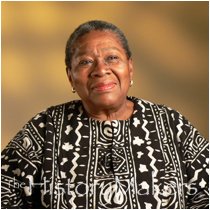
Interview
- August 15, 2008
Profession
- Category:
ArtMakers
- Occupation(s):
Theatrical Instructor
Birthplace
- Born: May 11, 1931
- Birth Location: Hempstead, Texas
Favorites
- Favorite Color: Purple, White
- Favorite Food: Gumbo
- Favorite Time of Year: Spring
- Favorite Vacation Spot: Egypt
Favorite Quote
"Did You Understand?"
Biography
Founder and artistic director of Kuntu Repertory Theatre, Vernell Audrey Watson Lillie was born on May 11, 1931, in Hempstead, Texas. Lillie attended Dillard University in New Orleans, Louisiana, where she earned her B.A. degree in speech and drama. In 1958, she completed a six year graduate study at Texas Southern University. She earned her M.A. degree in English from Carnegie Mellon University in 1971, and her D.A. degree in English from Carnegie Mellon University the following year.
In 1974, Lillie established the Kuntu Repertory Theatre with the intent to examine Black life from a sociopolitical-historical perspective. Lillie used drama to educate while entertaining. The theatre naturally developed into a supportive community for black writers, actors and artists. Since its establishment, the theatre has sponsored countless activities which highlight the African American community. Lillie has directed many productions including: The Buffalo Soldiers Plus One, Little Willie Armstrong Jones and Whispers Want to Holler.
Lillie has been the recipient of many prestigious awards including the University of Pittsburgh Chancellor’s Distinguished Teaching Award; the Outstanding Award for Women in the Arts by Alpha Kappa Alpha Sorority, Inc.; and the 2003 Career Achievement in Education Award from the Association for Theatre in Higher Education.
Lillie passed away on May 11, 2020.
Previews from the Digital Archive
Watch the full interview in the Digital Archive
- Slating of Vernell Lillie's interview
- Vernell Lillie lists her favorites
- Vernell Lillie describes her mother's family background, pt. 1
- Vernell Lillie describes her mother's family background, pt. 2
- Vernell Lillie talks about the community in Brazos Bottom, Texas
- Vernell Lillie remembers her maternal grandfather's home in Bellville, Texas
- Vernell Lillie recalls her childhood visits to Bellville, Texas
- Vernell Lillie describes her father's family background, pt. 1
- Vernell Lillie describes her father's family background, pt. 2
- Vernell Lillie talks about her family's education and occupations
- Vernell Lillie describes her parents' professions
- Vernell Lillie recalls how her parents met
- Vernell Lillie describes her parents' personalities and who she takes after
- Vernell Lillie describes her earliest childhood memory
- Vernell Lillie recalls her childhood in Hempstead, Texas and Houston, Texas
- Vernell Lillie describes her experiences at Crawford Elementary School in Houston, Texas
- Vernell Lillie recalls her teachers at Crawford Elementary School
- Vernell Lillie describes her involvement in the University Interscholastic League
- Vernell Lillie recalls her early interest in theater
- Vernell Lillie remembers the notable African American educators in Houston, Texas
- Vernell Lillie recalls her teachers at Phillis Wheatley High School in Houston, Texas
- Vernell Lillie remembers participating in the I Speak for Democracy oratorical contest
- Vernell Lillie recalls her early involvement with civil rights
- Vernell Lillie describes the Sweatt v. Painter case of 1950
- Vernell Lillie talks about the influence of her education on her life and career
- Vernell Lillie recalls Thurgood Marshall's speech during Sweatt v. Painter, 1950
- Vernell Lillie describes her extracurricular activities at Phillis Wheatley High School
- Vernell Lillie describes her decision to pursue acting
- Vernell Lillie recalls her decision to attend Dillard University in New Orleans, Louisiana
- Vernell Lillie talks about her parents' attitudes towards her theater career
- Vernell Lillie recalls the productions at Dillard University in New Orleans, Louisiana
- Vernell Lillie describes her work at the Julia C. Hester House in Houston, Texas
- Vernell Lillie talks about her theater productions at Julie C. Hester House in Houston, Texas
- Vernell Lillie recalls the beginning of her teaching career at Houston's Phillis Wheatley High School
- Vernell Lillie talks about the first African American play she produced